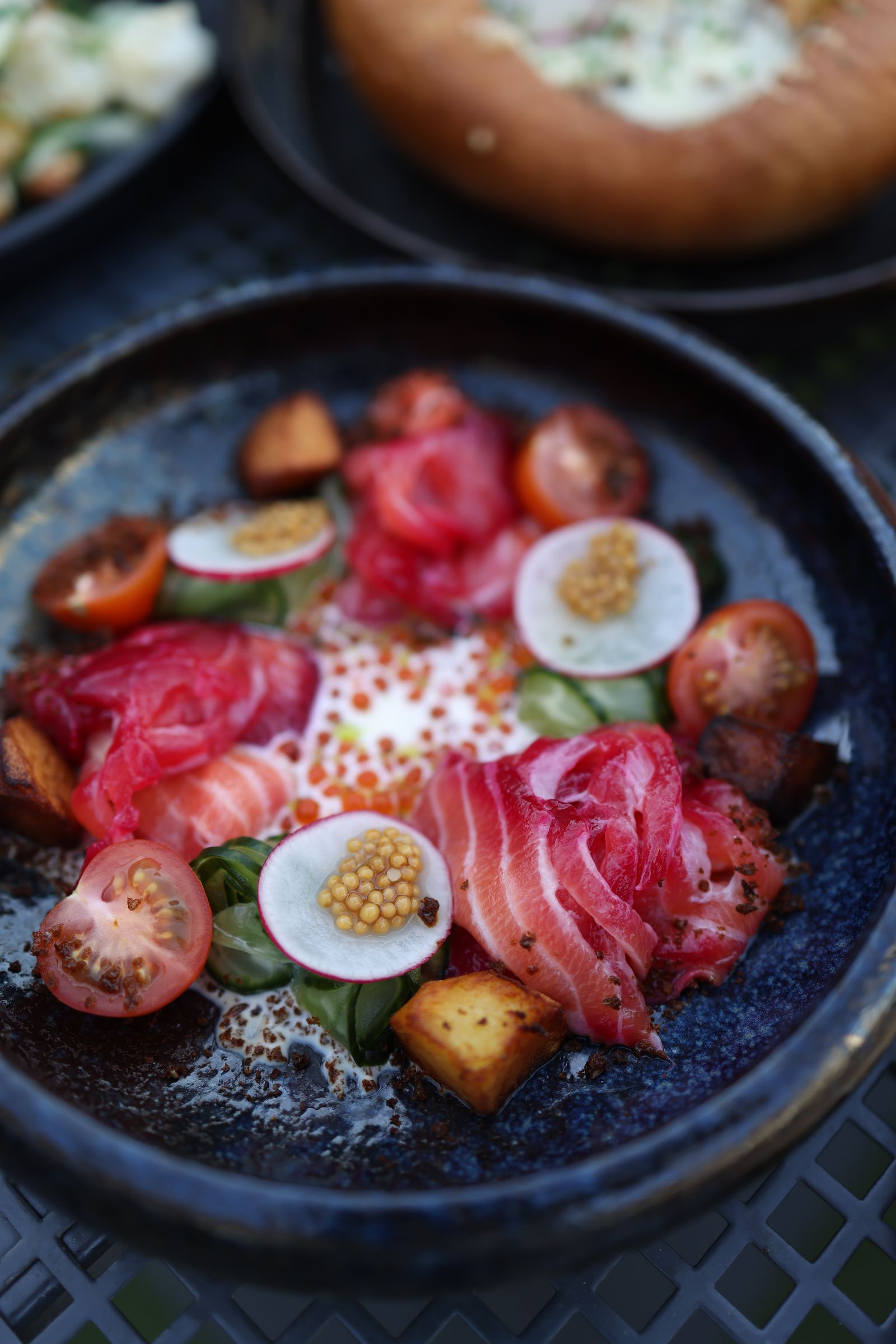
About this Dish
Norway's most challenging delicacy — trout or char salted and fermented for up to a year, served raw with flatbread, soured cream, onion and potatoes. The smell is powerful and the flavour extraordinarily complex — sour, fishy and intensely umami. A pre-refrigeration preservation method now eaten by choice as a cultural tradition. Rakfisk festivals in November are pilgrimages for Norwegian food lovers.
IngredientsServes 4
🐟Fresh whole trout or Arctic char, 2-3 kg, gutted and cleaned but not washed
🧂Coarse non-iodised sea salt, 60-80g per kg of fish (about 150-200g total)
🍬White sugar, 1 tablespoon
🌿Whole black peppercorns, 1 tablespoon
🫙Food-safe fermentation crock or large sealed plastic container with lid
🥔Waxy boiled potatoes, 6-8 medium, to serve
🧅Red onion, 2, finely sliced into rings, to serve
🥛Full-fat soured cream, 300ml, to serve
🫓Norwegian flatbread (lefse or knekkebrød), generous stack, to serve
Method
1
Pat the gutted fish completely dry with paper towels — moisture control is important here. Mix together the salt, sugar and peppercorns in a bowl to make your curing mixture.2
Rub the curing mixture generously all over the fish, inside the cavity and across the skin. Make sure every surface is well coated, as the salt is doing the preserving work.3
Place the fish in your sterilised crock or container, pressing it down firmly. Seal the lid tightly — traditional recipes use a weighted lid to keep the fish submerged in its own brine as it develops.4
Store in a cold, stable environment between 4-8°C, such as a cold cellar, garage or the bottom of your fridge. The fermentation process takes a minimum of 2-3 months, but traditionally 6-12 months for the fullest, most complex flavour.5
Check the fish every few weeks — a natural brine will form from the salt drawing out moisture. This is correct and desirable. The smell will become increasingly strong and pungent, which means the fermentation is working.6
When ready to serve, remove the fish from the brine and slice it thinly off the bone while still raw — rakfisk is always eaten uncooked. Arrange the slices on a board alongside your flatbread, soured cream, red onion rings and warm boiled potatoes.7
Eat by layering thin slices of rakfisk onto flatbread with a spoonful of soured cream and a few rings of red onion, with potatoes on the side. Have cold aquavit or lager nearby — it is traditional and, many would say, necessary.User Reviews
No reviews yet — be the first!
Sign in to leave a review
Members can create lists, save favourites and get recommendations.
Find the Best Rakfisk Near Me
AI-powered — Google, TripAdvisor and food blogs
🔥 Viral Recipes
How the world's most famous chefs — and creators — make this dish
Unmapping Scandinavia
47 views
🌍 Food Vlogs
Food vloggers eating and cooking it at the source
🌍
No videos yet
What To Eat
The World's Food Guide
© 2025 What To Eat · hello@whattoeat.world