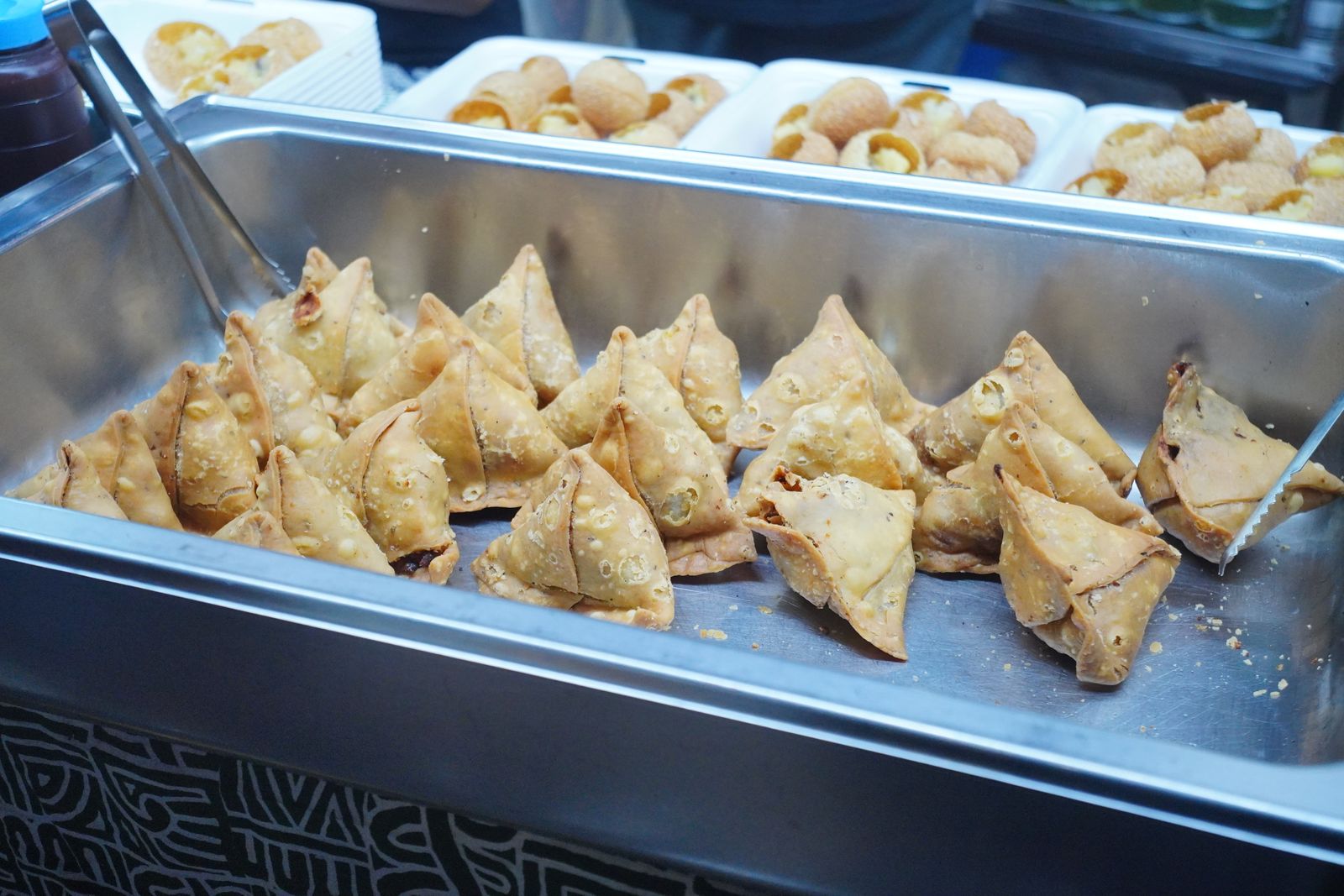
India's most beloved street food — crispy pastry triangles filled with spiced potatoes and peas, served with mint and tamarind chutneys.
The samosa has a history stretching back to Central Asia before the 10th century. The word comes from the Persian sanbosag, and the pastry was eaten across the Middle East and Central Asia before arriving in India with the Mughal court. Medieval Arab cookbooks describe a similar pastry called sanbusak. In India the samosa evolved from a meat-filled pastry into the predominantly vegetarian potato and pea version ubiquitous across the subcontinent. Today samosas are eaten across South Asia, East Africa, the Middle East and wherever Indian diaspora has settled.
The pastry must be made with oil not butter for the authentic flaky texture. Fry at 160°C — low and slow gives a crispier result than high heat. The filling must be completely dry.

© 2025 What To Eat · hello@whattoeat.world