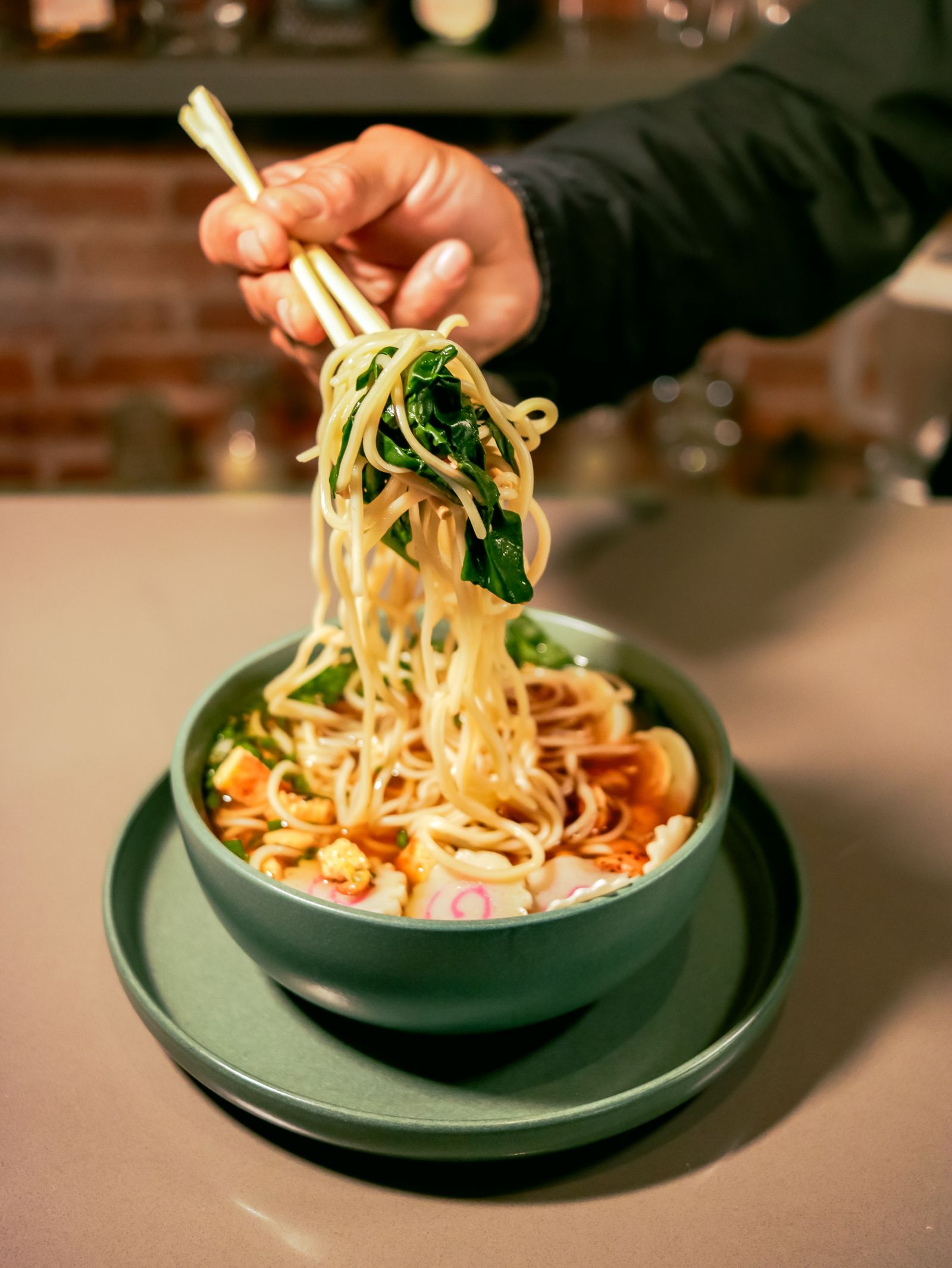
A Hakata classic — thin, straight noodles in a milky-white pork bone broth simmered for over 12 hours until it turns cloudy and rich.
Tonkotsu ramen originated in Kurume on the island of Kyushu in the 1930s and became closely associated with the city of Hakata (now part of Fukuoka) through the mid-20th century. According to popular accounts, its signature cloudy white broth was discovered somewhat by accident, when a cook left pork bones boiling too long and too hard, breaking down the collagen and marrow into an emulsified, opaque stock rather than a clear one. Hakata became famous for yatai food stalls serving tonkotsu ramen late into the night, and the style spread nationally through ramen chains from the 1980s onward, eventually becoming the most internationally recognized style of ramen outside Japan.
The broth must be boiled hard, not simmered gently, for at least 10-12 hours to properly emulsify the collagen and fat into a milky white stock. Noodles are thin and straight, cooked very briefly since the broth is intensely hot, and diners can typically request noodle firmness (bariKata, kata, futsuu).



© 2025 What To Eat · hello@whattoeat.world